Sale!

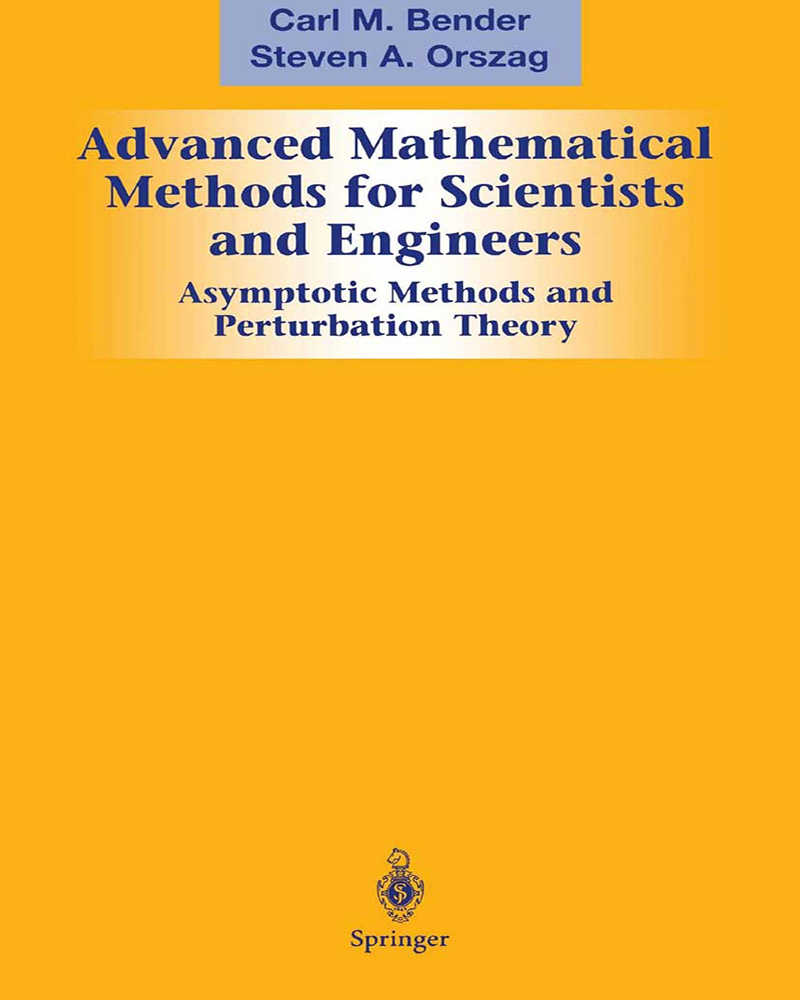
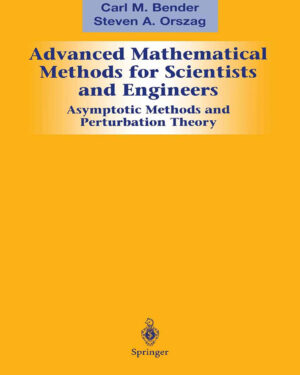
Advanced Mathematical Methods for Scientists and Engineers: Asymptotic Methods and Perturbation Theory

Original price was: $79.99.Current price is: $19.99.

-75%
Frequently bought together:
Advanced Mathematical Methods for Scientists and Engineers: Asymptotic Methods and Perturbation Theory
You're watching:Advanced Mathematical Methods for Scientists and Engineers: Asymptotic Methods and Perturbation Theory Original price was: $79.99.Current price is: $19.99.
Proofs: A Long-Form Mathematics Textbook
Proofs: A Long-Form Mathematics Textbook Original price was: $49.99.Current price is: $19.99.
Div, Grad, Curl, and All That: An Informal Text on Vector Calculus
Div, Grad, Curl, and All That: An Informal Text on Vector Calculus Original price was: $59.99.Current price is: $19.99.
Concrete Mathematics: A Foundation for Computer Science
Concrete Mathematics: A Foundation for Computer Science Original price was: $59.99.Current price is: $19.99.
Mathematical Theory of Feynman Path Integrals: An Introduction
Mathematical Theory of Feynman Path Integrals: An Introduction Original price was: $39.99.Current price is: $19.99.
Total : $19.99

Spend $200 in Your Cart, Get $30 Off Instantly!

  • Instant Download
  • Best prices guaranteed
A clear, practical and self-contained presentation of the methods of asymptotics and perturbation theory for obtaining approximate analytical solutions to differential and difference equations. Aimed at teaching the most useful insights in approaching new problems, the text avoids special methods and tricks that only work for particular problems. Intended for graduates and advanced undergraduates, it assumes only a limited familiarity with differential equations and complex variables. The presentation begins with a review of differential and difference equations, then develops local asymptotic methods for such equations, and explains perturbation and summation theory before concluding with an exposition of global asymptotic methods. Emphasizing applications, the discussion stresses care rather than rigor and relies on many well-chosen examples to teach readers how an applied mathematician tackles problems.
There are 190 computer-generated plots and tables comparing approximate and exact solutions, over 600 problems of varying levels of difficulty, and an appendix summarizing the properties of special functions.